

Why Memory Matters
Your LaunchLemonade Lemonades get smarter and more helpful when they remember key facts about you, your brand, and your work. Good memory means fewer repeats, faster results, and a more personal experience.Understanding Brain vs Knowledge
LaunchLemonade has two ways to give your Lemonades information:Setting Up Your Brain
The Brain feature lets you organize your knowledge into separate contexts that any Lemonade can access.Accessing the Brain
1
Go to Profile & Billing
Click Profile & Billing in the top navigation bar
2
Select the Brain Tab
Click the Brain tab (6th tab, with globe icon)
3
Enable Brain
Make sure the Enabled toggle is turned on (green)
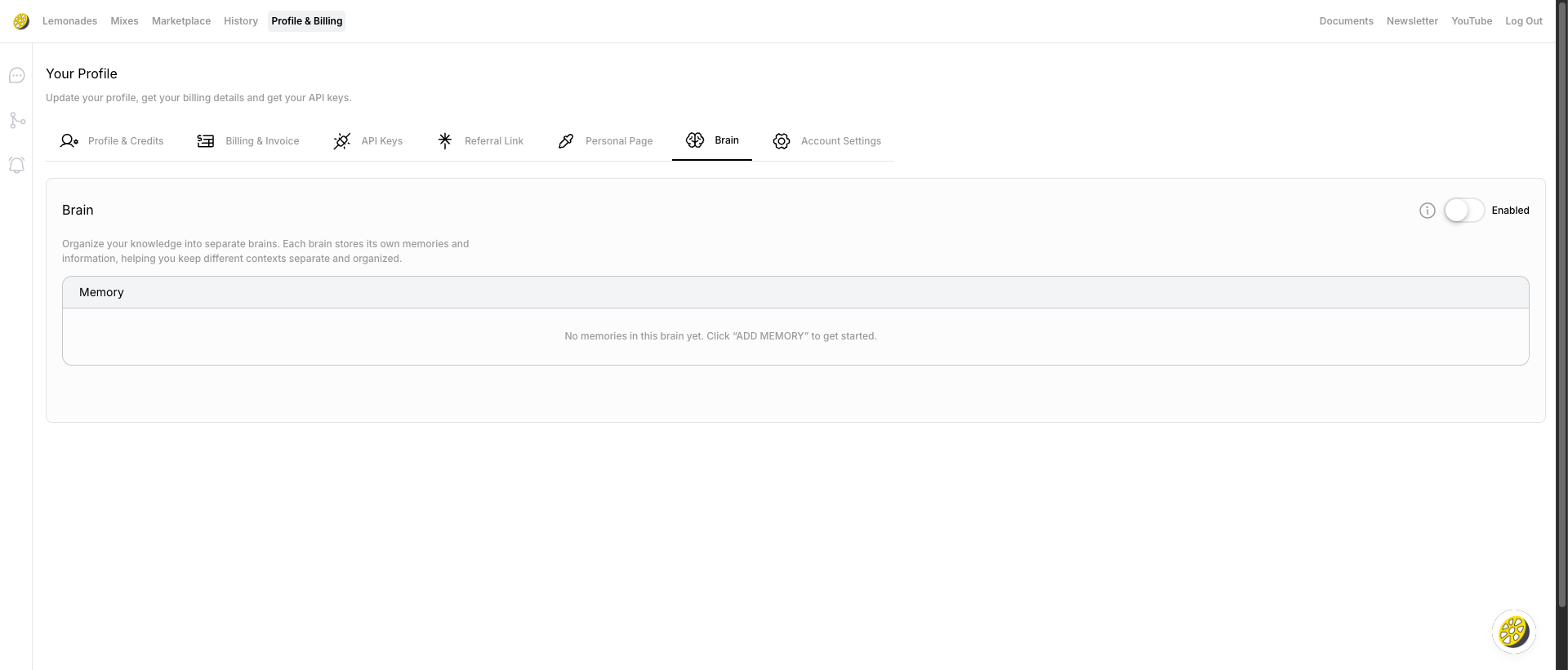
Creating Multiple Brains
You can organize your knowledge into separate brains for different contexts:- Click ”+ Add New Brain” to create a new brain
- Each brain has its own tab (e.g., “Dyslexic”, “test”)
- Switch between brains by clicking on their tabs
Adding Memory to a Brain
Simply type or paste information into the text area. Each brain stores its own memories and information, helping you keep different contexts separate and organized. Example entries:Linking Brain to a Lemonade
1
Open Your Lemonade
Go to Lemonades and click on a Lemonade to edit it
2
Go to Details Tab
Click the Details tab in the Lemonade editor
3
Select Brain
Use the Brain dropdown to select which brain context to use
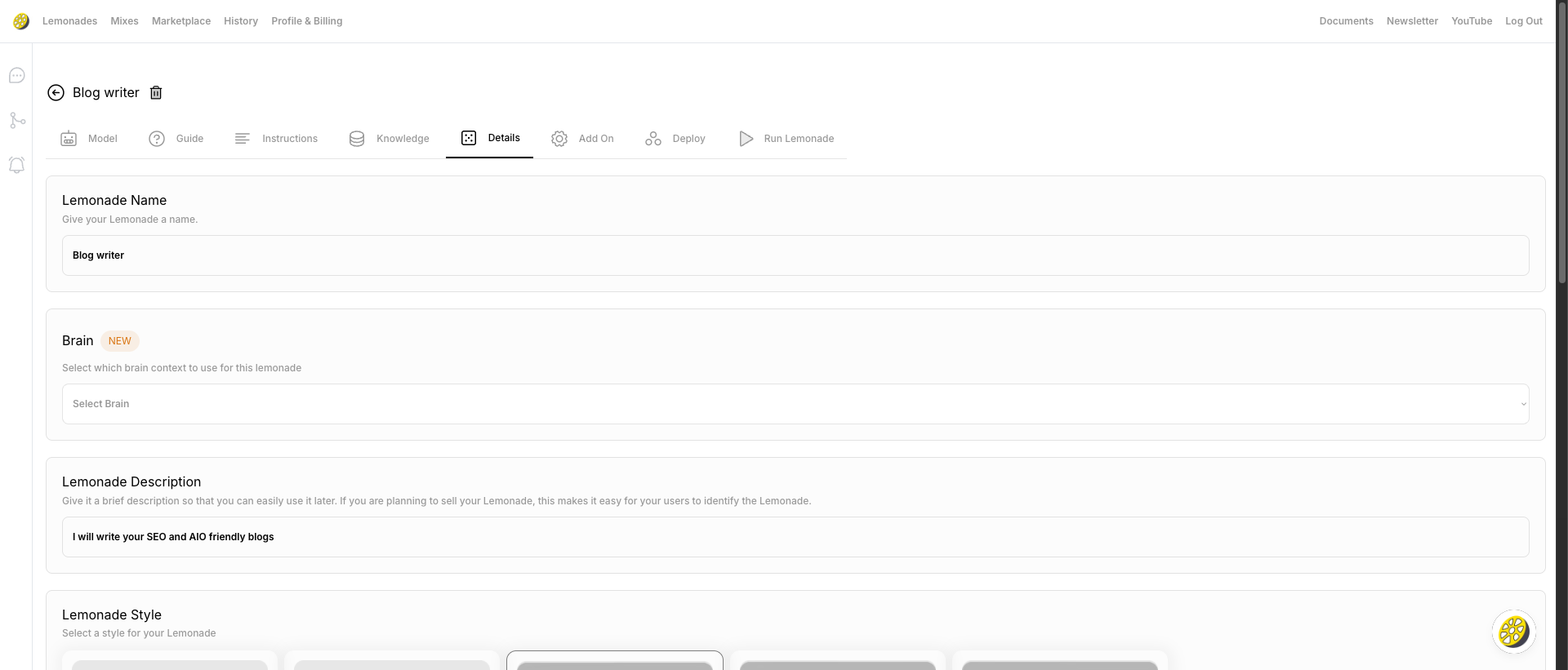
The Brain feature is marked as NEW in the Details tab!
Adding Knowledge to Individual Lemonades
For Lemonade-specific knowledge, use the Knowledge tab:Accessing Knowledge
1
Open Lemonade Editor
Click on any Lemonade from your dashboard
2
Go to Knowledge Tab
Click the Knowledge tab (4th tab)
Adding Files
Click “Add Files” to upload documents:- PDFs, Word documents, spreadsheets
- The files will be processed and your Lemonade can reference them
Adding Websites
Click “Add Websites” to teach from web content:- Enter any URL
- Your Lemonade will crawl and learn from the content
Integrations
Connect external sources:- Notion – Connect your Notion workspace
- Google Drive – Connect your Google Drive files
Remember All Conversations
Want your Lemonade to remember every chat automatically?1
Go to Add On Tab
Open your Lemonade and click the Add On tab
2
Enable Memory
Toggle on “Remember all conversations with this Lemonade”
Saving Individual Insights
During any chat, you can save specific responses to memory:- Find a response you want to save
- Click the brain 🧠 icon below the response
- The insight is saved directly to that Lemonade’s memory
What Makes Good Memory Content?
For best results, focus on core facts, preferences, and principles:About You (the User)
- Your name and how to pronounce it
- Your role and goals
- Your top priorities for the next 3 months
- How you like to receive info (e.g., “Summarise in bullet points”)
- Your preferred working style or communication tone
About Your Brand or Business
- Mission and vision statement
- Your brand values or voice (e.g., “We’re playful but always professional”)
- Key products or services (with short descriptions)
- Ideal customer or audience (with examples)
- Taglines or slogans
Useful Workflows
- Step-by-step checklists you use often
- Templates for reports, emails, or documents
- Key FAQs and answers for your team or customers
Other Ideas
- Recent wins or case studies
- Common objections in sales or support
Pro Tips
Keep it fresh
Keep it fresh
Update memory as your goals or business change.
Be concise
Be concise
Short, clear facts work best (think “cheat notes”).
Avoid sensitive info
Avoid sensitive info
No passwords or private addresses.
Summarise, don't dump
Summarise, don't dump
If you paste a long doc, add a summary or key bullet points.
Review often
Review often
Check what your Lemonade “remembers” periodically.
Use multiple brains
Use multiple brains
Create different brains for different projects or contexts.
Example Memory Entries
Quick Start Checklist
1
Set up your Brain
Profile & Billing → Brain → Add your core facts
2
Link to Lemonades
Lemonade → Details → Select your Brain
3
Add specific knowledge
Lemonade → Knowledge → Upload files or websites
4
Test
Run your Lemonade and ask it to recall a fact you’ve saved